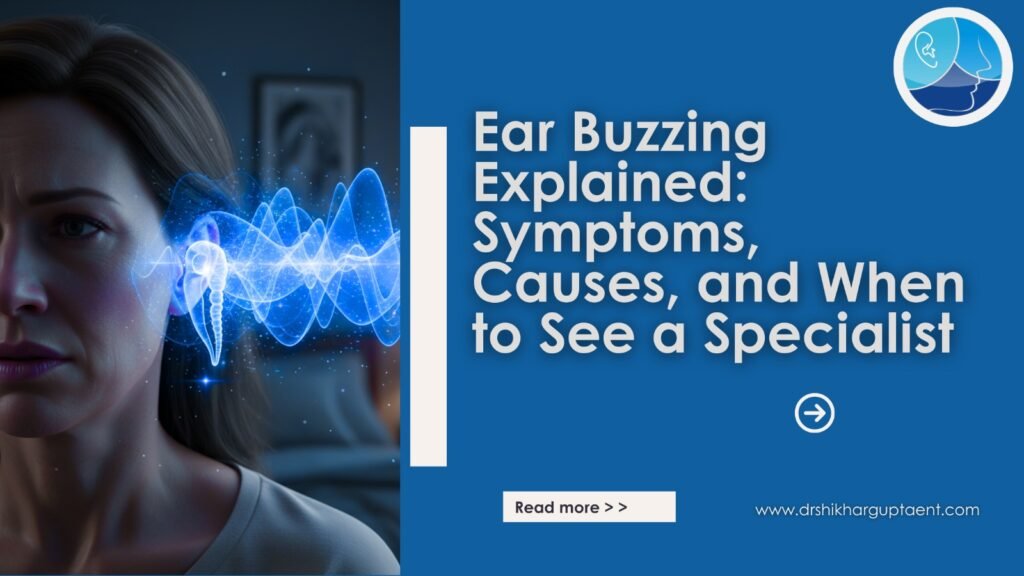
Hearing a persistent buzzing, humming, or ringing in one or both ears can be unsettling. For many people, this sensation—often described as ear buzzing—comes and goes. For others, it becomes a daily distraction. While ear buzzing is a common symptom, it is not a diagnosis. In healthcare, this sound is typically associated with tinnitus, a condition that affects millions worldwide.
This blog breaks down what ear buzzing means, why it happens, and when it is important to seek medical care. Best ENT specialist in Rohini
What Is Ear Buzzing?
Ear buzzing is a type of tinnitus, a perception of sound when no external noise is present. The sound may differ from person to person and may be described as: Best ENT specialist in Rohini
- Buzzing
- Ringing
- Humming
- Hissing
- Clicking
- Whistling
- Roaring
- Pulsating or heartbeat-like sounds
Tinnitus can occur in one ear (unilateral) or both ears (bilateral), and may be temporary or persistent.
Common Symptoms Associated With Ear Buzzing
While the buzzing sound is the most prominent symptom, individuals may also experience:
- A feeling of fullness or pressure in the ear
- Sensitivity to noise
- Hearing loss or difficulty hearing clearly
- Dizziness or balance issues
- Headaches
- Intermittent or constant sound perception
Symptoms may worsen at night or in quiet environments, making sleep and concentration challenging for some. Best ENT specialist in Rohini
What Causes Ear Buzzing?
There are many reasons a person may develop tinnitus. Some causes are minor and temporary, while others require medical attention. Below are the most common:
1. Exposure to Loud Noise
Sudden or prolonged exposure to loud sounds—such as concerts, machinery, firearms, or headphones at high volume—can damage the inner ear’s hair cells. This is one of the leading causes of tinnitus.
2. Earwax Blockage
A buildup of earwax can block the ear canal and cause buzzing, fullness, or hearing changes. Once removed, symptoms often improve. Best ENT specialist in Rohini
3. Age-Related Hearing Loss (Presbycusis)
As we age, the delicate structures of the inner ear naturally decline. Tinnitus frequently accompanies age-related hearing loss. Best ENT specialist in Rohini
4. Middle or Inner Ear Problems
Conditions such as:
- Ear infections
- Fluid buildup
- Eustachian tube dysfunction
- Otosclerosis (abnormal bone growth in the ear)
can lead to buzzing or ringing sensations. Best ENT specialist in Rohini
5. Medication Side Effects
Several medications are known to be “ototoxic,” meaning they can affect hearing. These include:
- Certain antibiotics
- High-dose aspirin
- Chemotherapy drugs
- Some diuretics
- Anti-inflammatory medications
If tinnitus begins after starting a medication, consult your healthcare provider. Best ENT specialist in Rohini
6. Circulatory or Vascular Issues
Pulsating buzzing or “whooshing” sounds may be caused by:
- High blood pressure
- Abnormal blood vessel structure
- Anemia
- Atherosclerosis
This type is called pulsatile tinnitus and often requires medical evaluation.
7. Stress, Anxiety, and Fatigue
Stress can heighten the brain’s perception of tinnitus, making the buzzing sound more noticeable.
8. Temporomandibular Joint (TMJ) Disorders
Problems with the jaw joint can affect nearby ear structures, causing buzzing or other ear sensations.
9. Head or Neck Injuries
Trauma can impact nerves, hearing mechanisms, or blood flow to the ear.
How Is Ear Buzzing Diagnosed?
A healthcare provider may recommend:
- A comprehensive medical history review
- Physical examination of the ear
- Hearing tests (audiometry)
- Imaging studies (CT or MRI) if needed
- Blood tests if vascular or metabolic causes are suspected
The goal is to identify any underlying conditions and create an appropriate treatment plan.
Treatment Options
Treatment depends on the cause. Common approaches include: Best ENT specialist in Rohini
Earwax Removal
Professional cleaning or irrigation can resolve tinnitus due to blockage.
Medication Adjustment
If tinnitus is medication-related, a doctor may adjust dosage or switch medications.
Management of Chronic Tinnitus
For persistent tinnitus, healthcare providers may recommend:
- Sound therapy (white noise machines, hearing aids with masking features)
- Cognitive Behavioral Therapy (CBT) to reduce stress and improve coping
- Hearing aids for those with hearing loss
- Tinnitus retraining therapy (TRT)
Treating Underlying Conditions
Managing high blood pressure, infections, jaw disorders, or vascular issues can significantly improve symptoms. Best ENT specialist in Rohini
When Should You See a Specialist?
It is important to consult a healthcare professional if you experience:
- Sudden buzzing accompanied by sudden hearing loss
- Buzzing in only one ear that does not go away
- Pulsating or heartbeat-like sounds in the ear
- Ear buzzing after a head injury or trauma
- Persistent buzzing lasting more than a few weeks
- Buzzing associated with dizziness, vertigo, or balance issues
- Severe anxiety or sleep disturbances due to tinnitus
Early evaluation can help diagnose underlying conditions and improve long-term outcomes.
Preventing Ear Buzzing
While not all causes are preventable, you can reduce your risk by:
- Protecting your ears from loud noise
- Keeping headphone volume under 60%
- Avoiding inserting objects into the ear canal
- Managing stress through relaxation techniques
- Maintaining healthy blood pressure
- Attending regular hearing check-ups
Final Thoughts
Ear buzzing is a common symptom that can range from mildly annoying to significantly disruptive. Understanding its causes and knowing when to seek medical advice is crucial. If buzzing in your ears persists or interferes with daily life, a healthcare specialist—such as an audiologist or ENT physician—can help identify the cause and guide you toward effective treatment options. Best ENT specialist in Rohini
FAQs
1. What does it mean when I hear a buzzing sound in my ear?
Hearing a buzzing sound—often called tinnitus—means you are perceiving noise without an external source. It can be caused by earwax, noise exposure, hearing loss, infections, or other underlying medical conditions. Best ENT specialist in Rohini
2. Is ear buzzing permanent?
Not always. Some cases are temporary, especially if caused by noise exposure or earwax buildup. Persistent or chronic tinnitus may require evaluation by an ENT specialist or audiologist.
3. Should I worry about buzzing in only one ear?
Buzzing in one ear (unilateral tinnitus) that does not improve should be checked by a specialist. In some cases, it may signal an underlying condition that needs medical attention.
4. Can stress cause ear buzzing?
Yes. Stress and anxiety can intensify tinnitus or make the perception of buzzing more noticeable. Managing stress can help reduce symptoms.
5. What home remedies can help reduce ear buzzing?
Simple steps like reducing caffeine, managing stress, avoiding loud environments, and using white noise at night may help. However, home remedies do not replace a medical evaluation if symptoms persist.